

Male Fertility and Nutrition — What You Need to Know
Male fertility is a topic that does not get nearly enough attention. Yet according to research, male factors contribute to approximately 50% of all infertility cases globally. The encouraging news is that sperm health is highly responsive to lifestyle and nutritional changes — meaning what a man eats and supplements with can have a significant, measurable impact on his fertility.
This guide explains the key factors that affect male fertility, how nutrition plays a role, and what the science says about effective supplementation.
Understanding Male Fertility
Male fertility depends on several interconnected factors:
- Sperm count — the total number of sperm in a semen sample
- Sperm motility — the ability of sperm to move efficiently toward an egg
- Sperm morphology — the size and shape of sperm, affecting their ability to penetrate the egg
- DNA fragmentation — damage to the genetic material inside sperm, which can affect embryo development
All four of these parameters can be influenced by nutritional status, oxidative stress, hormonal balance, and lifestyle factors — making diet and supplementation a powerful tool.
1. Oxidative Stress — The Biggest Enemy of Sperm Health
One of the most significant causes of poor sperm quality is oxidative stress — an imbalance between harmful free radicals and the body’s antioxidant defences. Sperm cells are particularly vulnerable to oxidative damage because they have very little antioxidant protection of their own.
Sources of oxidative stress that harm sperm include:
- Smoking and alcohol consumption
- Poor diet high in processed foods
- Obesity and metabolic syndrome
- Environmental toxins and pollution
- Chronic psychological stress
2.The Role of Myo-Inositol in Male Fertility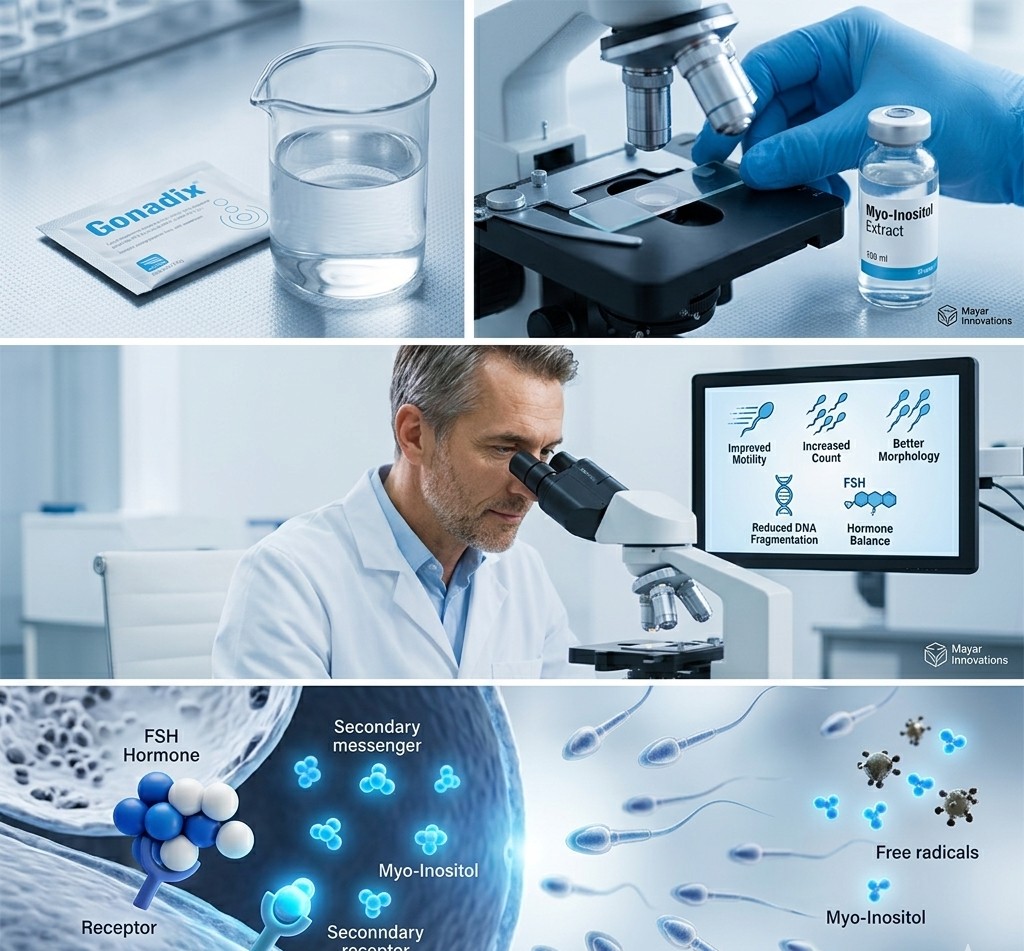
Myo-inositol is a naturally occurring compound — a type of sugar alcohol — that plays a critical role in cell signalling, hormone regulation, and metabolic function. While it is well known for its benefits in female fertility (particularly PCOS), research increasingly shows that myo-inositol has significant benefits for male fertility as well.
Clinical studies have found that myo-inositol supplementation in men leads to:
- Improved sperm motility — sperm move faster and more efficiently
- Increased sperm count — higher concentration of sperm per millilitre
- Better sperm morphology — a higher percentage of normally shaped sperm
- Reduced DNA fragmentation — less genetic damage in sperm cells
- Improved hormone balance — particularly FSH, which regulates sperm production
Myo-inositol works in the testes as a secondary messenger involved in FSH signalling — helping the body’s fertility hormones communicate more effectively. It also acts as an antioxidant within sperm cells, protecting them from oxidative damage.
3. Key Nutrients That Support Male Fertility
In addition to myo-inositol, a fertility-supportive diet should include:
- Zinc — essential for testosterone production and protecting sperm DNA from oxidative damage. Found in red meat, shellfish, and pumpkin seeds.
- Folate (Vitamin B9) — critical for healthy sperm DNA synthesis and repair. Low folate is linked to higher DNA fragmentation.
- Selenium — a powerful antioxidant that protects sperm and supports motility. Found in Brazil nuts, fish, and eggs.
- Vitamin C and E — potent antioxidants shown to significantly improve sperm count and motility.
- Omega-3 (DHA) — a structural component of sperm membranes; higher DHA levels linked to better motility and morphology.
4. Lifestyle Factors That Affect Sperm Health
- Quit smoking — significantly reduces sperm count, motility, and increases DNA damage
- Limit alcohol — heavy drinking lowers testosterone and sperm production
- Maintain a healthy weight — obesity lowers testosterone and sperm quality
- Avoid excessive heat — hot baths and tight clothing raise scrotal temperature, impairing sperm production
- Manage stress — chronic stress raises cortisol, suppressing testosterone
- Exercise moderately — improves testosterone; excessive intense training can have the opposite effect
- Reduce toxin exposure — pesticides, heavy metals, and BPA plastics can disrupt male hormones
5. How Long Does It Take to See Results?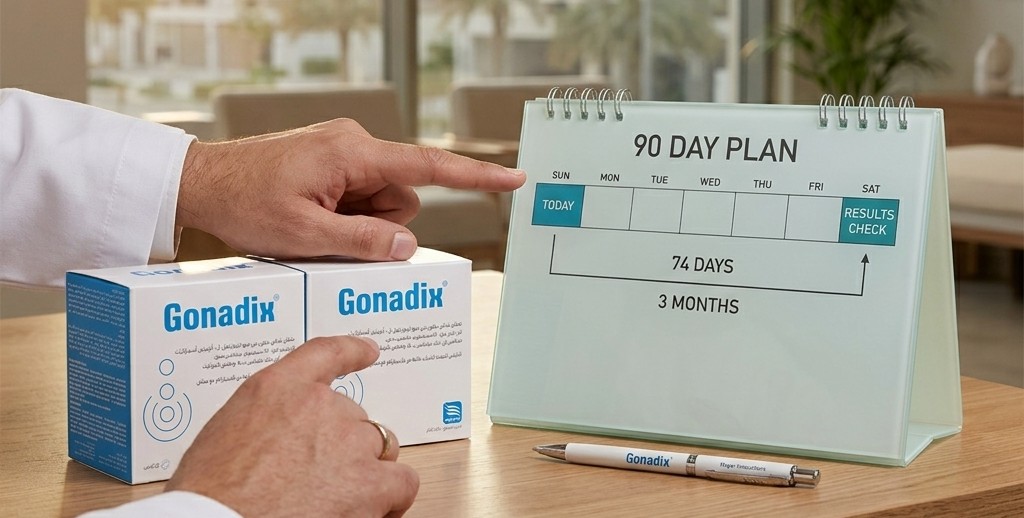
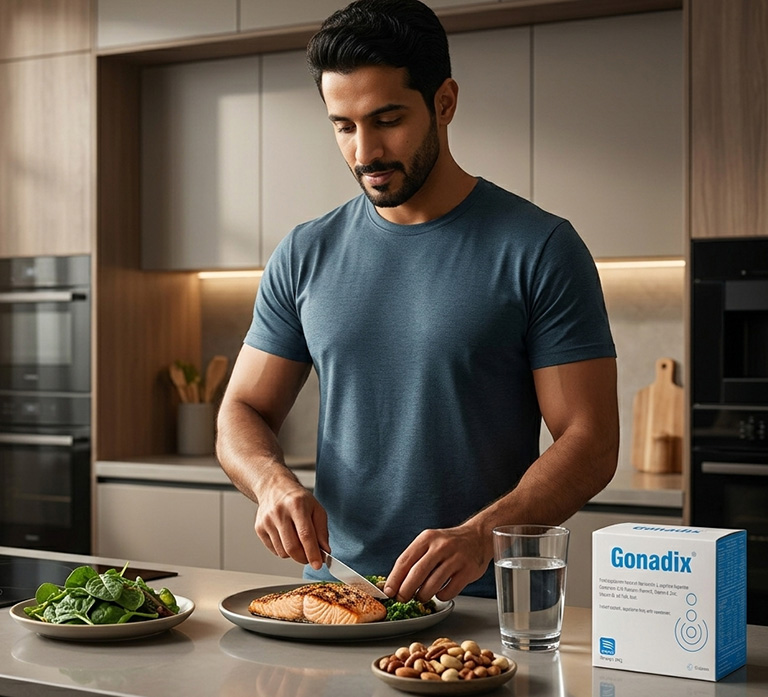
Sperm take approximately 74 days to mature. This means any nutritional or lifestyle change you make today will begin to affect sperm quality in roughly 2 to 3 months. Starting Gonadix alongside dietary improvements at least 3 months before trying to conceive gives the best chance of measurable improvement.
Final Thoughts
Male fertility is far more within a man’s control than many realise. Through targeted nutrition, myo-inositol supplementation, and positive lifestyle changes, significant improvements in sperm quality are achievable for most men.
At Mayar Innovations, we are committed to supporting both men’s and women’s reproductive health with science-backed solutions across Saudi Arabia.

 EN
EN  AR
AR